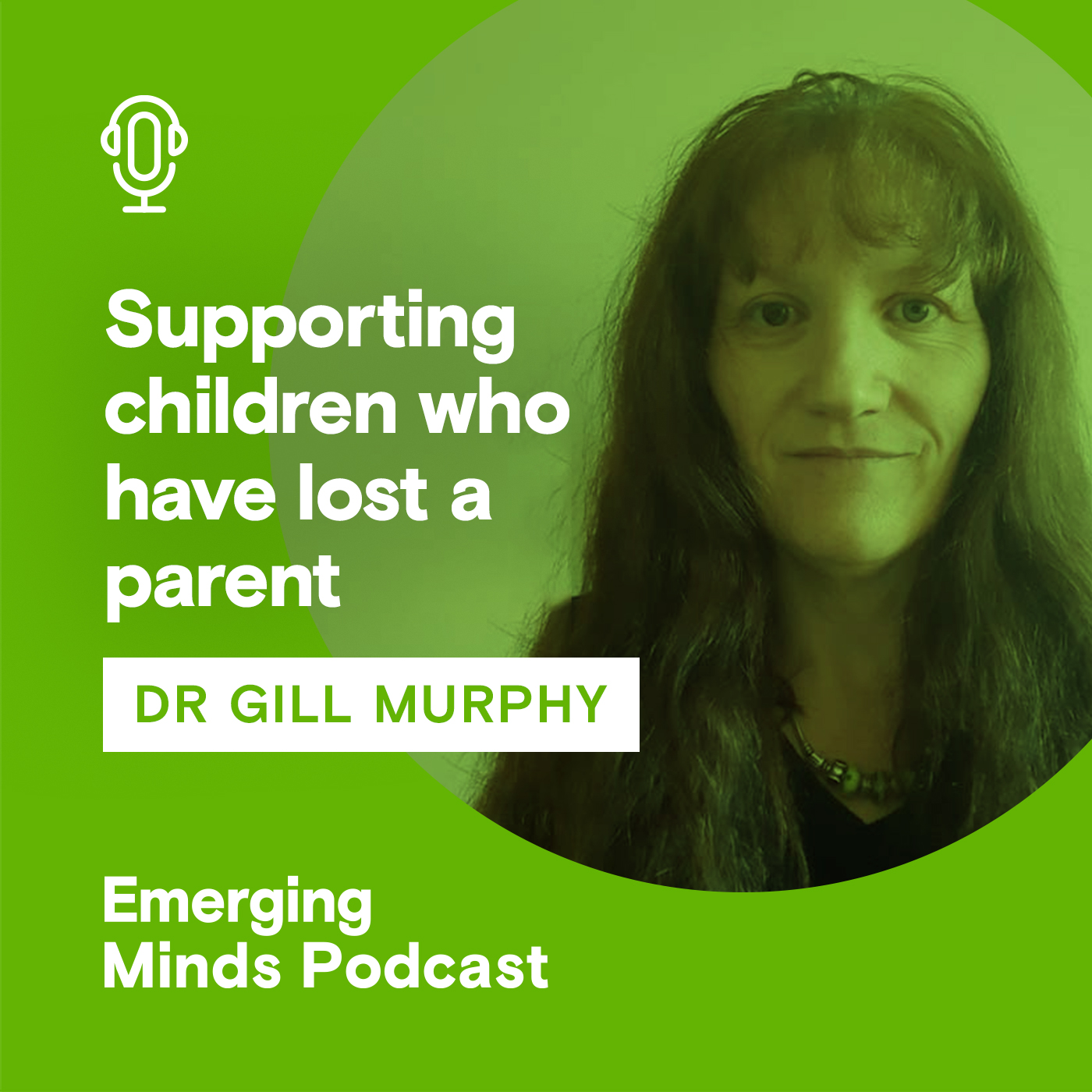
Supporting children who have lost a parent

Episode 92 • October 02, 2021 • 00:22:23
Supporting children who have lost a parent
Emerging Minds Podcast
Supporting children who have lost a parent

Oct 02 2021 | 00:22:23

/

Show Notes

Dr Gill Murphy is a lecturer at the School of Nursing and Midwifery at the Western Sydney University. She has worked as a mental health nurse for twenty years, with experience in forensic, in-patient, community and emergency mental health services.  Her engagement with mental health research led her to found the Childhood Parental Death Ambassador Program. As founder of the Childhood Parental Death Ambassador Program, Gill hopes to raise awareness around the needs and experiences of children when a parent is dying or has died, and to really make children visible within that process. As part of this, the program has delivered the Childhood Death Study, in which they interviewed adults who'd experienced the death of a parent during their childhood. The study found that a lack of information provided to children during and after their parent’s death meant that they often thought about it in distressing or unhelpful ways. Additionally, it found that children were often not supported to celebrate or remember their parent’s legacy, causing them to lose touch with the supporting and nurturing rituals they had enjoyed with that parent. In this episode of the Emerging Minds podcast, Gill discusses the need for practitioners to develop preparedness in their work with children who have lost a parent, and to be able to have conversations with them that are supportive and reconnecting. In this episode you will learn: Learning 1 (01:30) the key objectives of the Childhood Parental Death Ambassador Program. Learning 2 (02:36) the key findings of the Childhood Death Study, and what these mean for any practitioner working with a child whose parent is dying or has died. Learning 3 (04:17) the effects of secrecy or a lack of information on children’s ability to positively think about their deceased parent, and to stay connected with their legacy. Learning 4 (09:53) what some services are doing to actively involve children in memory making when a parent is dying or has recently died. Learning 5 (17:44) how practitioners can overcome anxiety to talk to children in ways that are supportive and attentive, and to ensure they are listening to what the child needs at the time.

Other Episodes

Episode 82

May 31, 2021 • 00:27:27
Episode Cover

Using self-determination to support family violence interventions

In this podcast, Craig Rigney, CEO of KWY shares how he walks alongside families in his work to provide a holistic family model of...
Listen

Episode 204

December 08, 2025 • 00:27:21
Episode Cover

Organisational allyship: A non-Aboriginal and Torres Strait Islander view

In the second episode of this two-part series, Lisa Hillan, a non-Aboriginal and Torres Strait Islander social worker, talks about her experience in working...
Listen

Episode 0

January 20, 2025 • 00:33:23
Episode Cover

A neurodivergent-affirming approach to children's mental health

In this episode, practitioners and parents of autistic and ADHDer children explore the concept of ‘neurodivergent-affirming practice’: what it means to them, how it...
Listen