[00:00:02] Speaker A: Welcome to the Emerging Minds Podcast.
[00:00:07] Speaker B: Hi, I'm Nicole Rollbush and welcome to the Emerging Minds Podcast.
Before we start today's episode, we'd like to pay respect to the traditional custodians of the land on which this podcast was recorded, the Kaurna people of the Adelaide Plains. We also pay respect to all Aboriginal and Torres Strait Islander peoples, their ancestors and elders past, present and emerging from the different first nations across Australia.
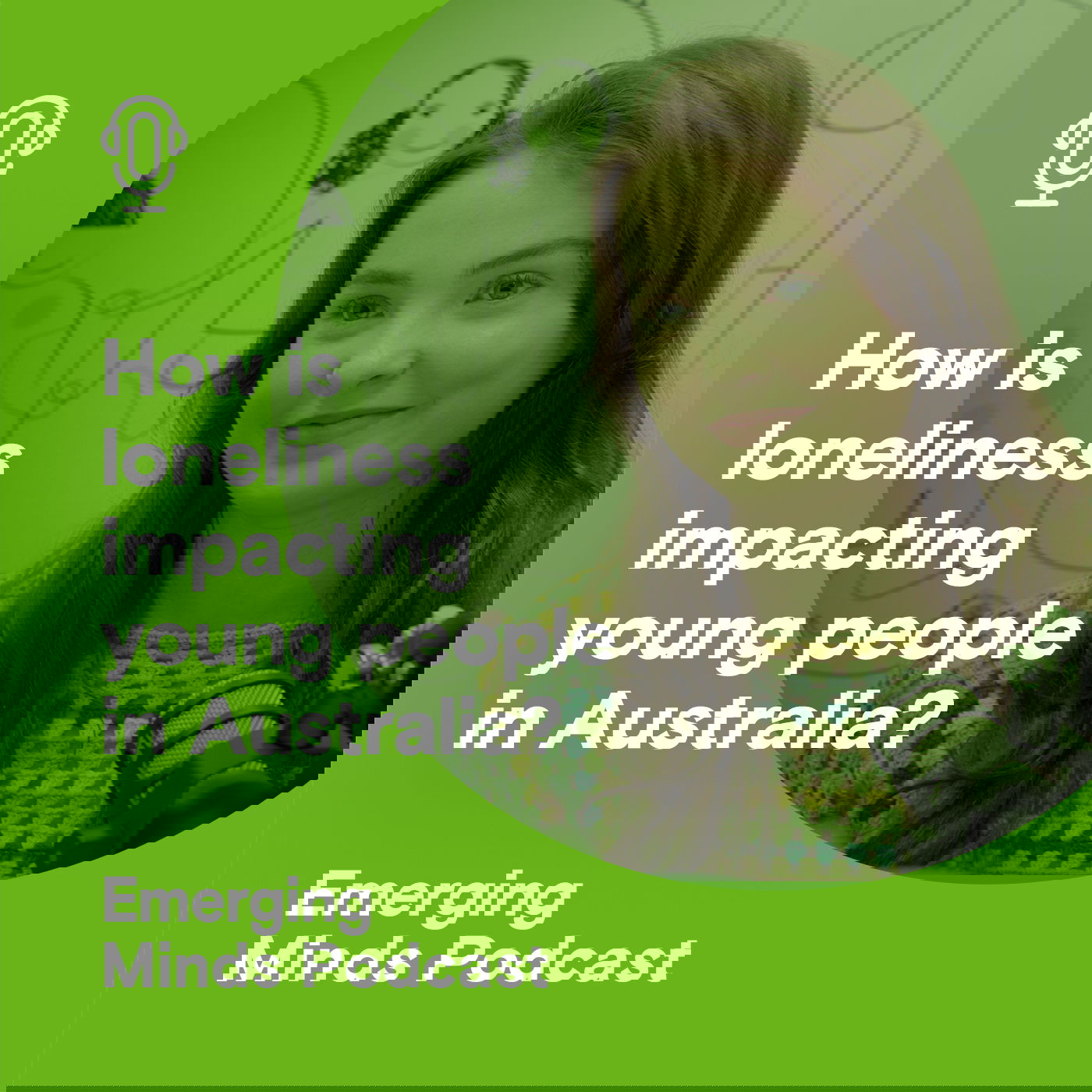
Today's episode is part one of a two part series in which guest host Nadia Rossi from the Emerging Minds Families podcast speaks with Dr. Ben Lohmeier and Amber Brock Fable. Amber is the founder of the South Australian Youth Forum and Ben is a Senior Lecturer in Social Policy within the College of Education Psychology and Social Work at Flinders University. In this conversation, Amber and Ben are sharing the findings from their co design study on loneliness and its relationship with young people's experiences of bullying and overall wellbeing. This research redefines loneliness not as stemming from isolation, but rather created by social dynamics within school environments. They discuss the process of co designing the study, the increased incidence of loneliness for young people in Australia, how issues like bullying are linked to loneliness and the importance of creating safe spaces for young people within and outside of the school environment. So, so let's hear now from Nadia, Ben and Amber.
[00:01:31] Speaker C: Ben and Amber, thank you so much for joining us today. I'm really looking forward to this chat and I'm so happy we've been able to have you both with us today to kind of talk about this really important topic.
Ben, you are joining us to talk about your research into youth loneliness and bullying which led you to co design a paper with Amber and the SA Youth Forum on this topic. So can you tell us a bit about your background and what led you to this work?
[00:01:58] Speaker A: No worries. So I started out my career in youth work mostly working around schools but also in some alternative accommodation settings for young people. Wanted the guardianship those sort of spaces and that was really enjoyable. I really valued that as a starting place for my career and continues to be something I'm very passionate about. I got a point in my career though where I kind of wanted to do a bit more around the evidence base for the practice we're doing. I of kind, kind of wanted to see if could learn a bit more and evidence the kind of things that we were doing. So this studied a PhD in Sociology and so now that shapes the way I think about problems like loneliness and bullying. And so I have been working at Flinders for the last five years and working on A few different research projects and very, very lucky to work in partnership with the SA Youth Forum and Amber. And we can tell a bit of the story about how this, this project came about. This project is fairly unique, particularly from my experience as a level of young people's participation and really leadership in the project. You know, it's got a genuine co design to it and we throw that word co design around a lot at the moment. Like it's a really popular word to use. But it'd be nice to talk about what that actually looks like in this context.
[00:03:06] Speaker C: Absolutely. That's why I really loved the work that you both, you know, coming together and really bringing that lived experience of youth into the conversation. I don't think you can get a better window into what's actually going on, Amber. So if we can talk about the Youth Forum as well. You founded the SA Youth Forum when you were 17 in 2021, which is very impressive. Can you tell us a bit about why you started the SA Youth Forum and how you came to co design this study with Ben and Flinders University?
[00:03:36] Speaker D: Yeah, no worries. So like you said, I started it when I was 17. It sounds all impressive and whatnot, but it really was just a call out to young people. I knew mostly friends at school to start meeting once a month on picnic blankets in the Adelaide Parklands because there's not a lot of community spaces out there that allow young people to just hang in me. And I guess we were kicked out of the library for being a bit too loud.
So started in 2022, our first program and it was mainly from a passion of really wanting to get my voice heard as a 17 year old, not being able to legally vote at the time, and coming out of COVID 19 as well, a lot of opportunities were really not there. Through my high school experience, I also moved schools and a teacher really influenced my passion, social justice and social change. And I realized that there's a whole world out there that I can really make a difference in. And I also wanted to meet more young people as well.
So the first program for 2022 was for 14 to 18 year olds and I'd put together these agendas based on topics that I thought were really impacting young people and then would kind of just have a chat for two hours on these picnic blankets about each other's experiences, storytelling, views were challenged and reshape.
And along that first year more young people rocked up, which was just absolutely phenomenal for me. Eight young people joined me in February 2022 and I just remembered that moment I just thought I started a revolution or something.
I was just so happy that young people joined. Mum had to keep donating more picnic blankets so everyone could have someone to sit.
Yeah. And yeah, I guess I just thought that these conversations needed to go somewhere beyond the picnic blanket. So I started minuting these discussions that we were having. We also did some local research and gathering some more information from peers that couldn't join us on the picnic blankets. Various reasons. And then we put together our first annual report with all these meeting minutes and stories in them and we, I guess marched into Parliament and presented it to politicians and MPs and also academics like Ben.
And what surprised me the most when we presented it to Ben was I guess his unshakable commitment to actually doing something about the issues we presented. And one of them was about loneliness and he was just committed to kind of looking into that topic a little bit more. So I guess that's how it's all started. Four years later, we're still going now with a bit more structure and an actual venue, which is great.
And we've got another branch for our 18 to 24 year olds. And continuing this project with Ben.
[00:06:27] Speaker A: That's amazing.
[00:06:28] Speaker C: So great to hear how it has grown and continues to grow. And then how you came to meet Ben and you've really championed the work and the SA Youth Forum and are able to work together in this. I wanted to talk about the topic of bullying and loneliness and you know, the main focus of the paper and why, you know, Ben, when you heard the SA Youth Forum talk about this, why it was such an important topic to you and to you, Amber as well. But what made it such that you both wanted to be so involved in and take it forward?
[00:06:56] Speaker A: It's a good question. I think at the time when Amber I first met, we were at a youth work conference. I invited Amber to come and speak on the panel that was talking about green and youth work and we got chatting about some of the different topics that had come up for in their discussion and their report. I was finishing up another project on loneliness around the time.
I think we're just lucky enough to go, oh yeah, we're both kind of interested in this and, and that's. Let's focus on that and see where it goes.
That's quite distinct and unique in a practice as well as a research context. Because even with great intentions to do youth voice and co design, it's still often adults going, we should do youth voice and co design. So it starts with these adults who want to do this project and they may probably even have a topic in mind and say we should do it about this thing. And so co design becomes part of that process. To have it start with a. A shared mutual interest is rare, I think, and a unique opportunity. So that was really cool. And then we initially thought, well, maybe we'd need some funding or something to do this. Of course you can never find funding straight off the bat for anything, let alone something like we're going to explore this vague area and see what we find.
So instead we started get started and did a few workshops with the forum to start designing the method. So what research method should we use and how should we explore that? Again, it's interesting with language around co design participation, who exactly does the creation like and how, who's initiating? So for example, my expertise in research is qualitative. So in a sense I was kind of only ever going to do a qualitative project with these guys.
[00:08:29] Speaker C: Right.
[00:08:29] Speaker A: I couldn't pretend to do something I didn't want to. But also the forum got to shape what that looked like and how we would do a qualitative exploration. So we decided to create maps of space spaces in young people's lives and, and then talk about what those spaces were like and the social experiences in their space. And that would become then a method of. If we use a techno academic language, it's almost like an object elicitation process. You create an object and you elicit a response about that object. Or it could be sort of as a kind of creative arts design methodology as well. So there's kind of various ways to position it. But again we kind of co created a bit of what I'm doing, what they're interested in, the conversation is where the kind of magic happens, if that makes sense. Yeah.
[00:09:09] Speaker C: And makes for such a robust kind of findings and end result, I feel. Amber, did you have anything to add to that, why the topic was so important to you and the forum?
[00:09:20] Speaker D: Yeah, totally. I think coming out of COVID 19 and I guess growing up in general, loneliness was really taboo and really stigmatised.
So when I think, yeah, in one of these monthly meetings it came up and I remember having like a feeling in my tummy like, oh my gosh, like this is so like taboo and whatnot. But we really talked about it and really unpacked it and it felt really good and I felt so connected to my peers because we were talking about loneliness and our own experiences.
And when we went to Ben and Ben's commitment to doing something about it with us.
I just, I ran with it because I knew that I'm not the only one that would feel just alone talking about loneliness and that more research and more conversation needed to happen around it. I guess loneliness is such like a paradox in an era of unparalleled digital connection, particularly with, you know, our generation always coined the most connected.
And so when we were starting out this project, it was really interesting with the maps of and the direction that our young people took them in. I remember asking around, you know, mapping out loneliness in your life and a space and map out where you feel lonely or where you feel connection. And some young people would map a bedroom, a school, and then others would map their entire day in a life circle and say, like walking to the bus was a bit lonely, but on the bus wasn't that bad. And then we kind of had a more robust discussion about how our young people interpreted what we were talking about and I guess how those life cycles that young people did, they mapped to the particular rooms or school classrooms that the other young people mapped out. So it was really interesting around the flexibility. We went into this and I think the whole project was built on not having any expectations at all and really just building it from the ground up. We really did it without any resources or funding or venue even. But just like the forum, it's grown into something that's remarkable.
[00:11:28] Speaker C: I find the mapping so interesting that you are able to show that some young people are having similar experiences and others are not. Because I think being able to look back on it in a visual way and map it through can help young people reveal and understand how they are really feeling. And I wanted to talk about the social and emotional wellbeing of children and young people and what your findings revealed to you both about how they are feeling.
[00:11:55] Speaker A: The short answer is lots, right? It's really like EM was saying before. This project seems to grow. And while initially I think we understood a little bit of the reason to do it, like your group's interest in it. And then we did a little bit of background research to say, okay, how does this issue look? And some of the interesting statistics, around 15 years ago, I think in Australia, young people were the least lonely age group, coming to some national data called hilda. And then since then, they've just progressively kind of increased over time and then till during COVID they peaked as the most lonely age group in Australia and it's dropped a little bit. There's some debate around, you know, how to measure it and what the best measures are and where Young people fit. But now there's a general consensus. It seems in the literature that there's a U shape across life, and it starts with a little bit lonelier, and then you get less. Less lonely over time. And then at the end of life, you get a little bit more lonely again. And we can think about maybe some of the reasons why that makes sense at the older stage of life. But I think this project is discovering the reasons why. It's true. In the earlier stages.
[00:12:53] Speaker B: Yeah.
[00:12:53] Speaker D: I think the world is moving in a direction of acknowledging loneliness. I mean, at the international level, the World Health Organization has declared a global health priority. And here in South Australia, the Uniting Community Survey has shown that 91% of young people feel lonely, often or always, which is alarming. So I think that just adds more depth to our understanding and kind of the direction that we wanted to take.
[00:13:22] Speaker C: And it's really. You brought up Covid a few times, and I think, like, as an older person, not really, for me, not fully realizing the impact that that really had on that younger generation that were really in a pivotal moment of. Of growing and how that kind of personal connection got just completely stripped away and how we're having to rebuild that as well.
I wanted to move into the connection of loneliness and bullying and what you can tell us about that and how they kind of connect with each other.
[00:13:55] Speaker A: This is one of the areas that was really interesting, I think, because there's an intuitive kind of connection there. You can imagine a lonely young person at school being bullied. And so there's kind of a logic to it. But when we think about the way loneliness has predominantly been thought about or intervened in or defined, it's usually in terms of that loss of. Or an absence of some sort of connection.
So usually the absence of a desired connection is the short way of saying it. And this is more nuanced to it than that, but that's the kind of popular way. Whereas this finding that we had in our project, as well as some work by a UK academic, his name is Kevin Yang, he was looking at a large kind of data set in the UK called the Millennium Cohort. And he sort of posed this idea that there was a connection in the data between young people who are feeling lonely and undesirable connections, which is kind of flipping this. This idea around. Right. And rather than desiring more connections, there might be people who are present who you don't want to be around. So that's where we started thinking through our data, looking through this lens, and what we noticed is in our relatively small cohort that we did some work with, and this is qualitative, exploratory work. But they. They talked about the presence of bullies and the presence of other unwanted people in their spaces that made them feel lonely, which is quite surprising. Like you think, that's not necessarily how we've been thinking about in the past, but there is also this element to it where it's not that these young people didn't have friends. You know, they had other connections in the space. They had friends that were in their circle or friends that sometimes they've been separated from through class makeup. So you have friends more broadly in the school, but not in your class. Or they had other adults, like youth workers or social workers or management staff or teachers who they had a good connection with. But it's still the presence of those unwanted connections still impacted. So that's a really different way of thinking about it.
You can be lonely in a crowd is another kind of common way of thinking about it, but lonely because you've got these mixed relationship experiences. So that was something that we've explored a bit more.
[00:16:00] Speaker D: Yeah, around bullying and loneliness. I think we also challenge the traditional view that these are not personal problems, but more constructed social system, and that in this case being schools. And this kind of introduces what the. The paper talks around, like, effective economies, which. I've got a definition here. So around, like, emotional harm that emerges from social systems rather than just individual behaviors. And I guess this is also really relevant to when we think about young people experiencing loneliness or experiencing bullying, that it's not their fault or it's not on them, but rather how schools are designed to, I guess, enhance potential social hierarchies and exclusions, which can innately produce feelings of isolation and exclusion as well.
[00:16:53] Speaker A: I love that you dived into the academic textbook language there. This is fantastic because it's. Yeah, it is trying to describe, I think, exactly what you've said. Like sometimes these issues, loneliness and bullying, we look at trying to solve them at the individual level. So we think individually, if you're lonely, what you need is more connections. We can do some interventions that are getting a lot of attention at the moment, things like social prescribing. So you go and see your doctor and your doctor says you need to have some more connections. So I prescribe to you to go and join this group or this club. Quite a bit of evidence around that, you know, particularly if you're thinking about some of the potential health impacts of loneliness and they've been compared to things like excessive drinking and smoking. If you address the loneliness, some of those other issues seem to also get addressed. So great intervention, but that's at an individual level. Right. So it kind of asks the individual to do more work to solve the problem. Whereas we're taking a slightly different approach and saying, let's look at the context, let's look at the school, because that's where young people are and there's other spaces in their lives and how that creates opportunities for loneliness or for connection. And what. Maybe we can change the environment a little bit. So similar with bullying, bullying has a very long history of being investigated at, like, individual level where it's perpetrators, victims, bystanders, those sort of people are identified as needing to take some sort of action or intervention. But there's another area of bullying research that says, well, now, again, let's look at the school context. How are schools structured? You go into school in batches, and then you get approved to go to the next level. And you've always got these distinctions between student and then teachers and management. So there's these embedded systems and hierarchies of inequality within school. Schools are also really great places. Like, there's lots of good things about it, and they're full of really great people, like teachers and youth workers. But these are some of the contextual things that we can also think about in this space that impact on things like bullying and loneliness.
[00:18:47] Speaker C: Yeah, and you mentioned spaces and schools creating safe spaces. How do you feel that schools can create those safe spaces without, like, I feel when there's a safe space created for someone and, you know, that's where I can go. But then is there also an isolation and a loneliness that comes with that person going to that safe space? Because then everyone knows that they're going to that safe space. Is there, like a complexity around that? And how are young people feeling about those spaces that are offered?
[00:19:15] Speaker D: Yeah, like Ben was talking about before, around the definition of loneliness as both the absence of desired social connection, but also the presence of undesired social connection that can lead. Lead into, you know, feeling unsafe in crowds, but also feeling unsafe through being perceived as being watched. And I guess we're moving into schools a lot, focusing on, like, the open plan designs and really kind of glass everywhere and whatnot, which I guess is intentional to create, like, inclusivity and. Yeah. Being seen, but also can create feelings of continued surveillance. And this is kind of what our study touched on a little bit. And the feeling of always being watched and perceived as a loner or alone. And not just being able to sit comfortably in those feelings. So in the school we studied, the Specialised Assistant School for Youth, which I'll go by as sassy, they have designated Zen dens, so you can control the lights if they're on or off.
Also, there was like weighted blankets, pillows, and these are retreat spaces for young people to go to, to be alone or to retreat when they're feeling isolated. They're kind of tucked away from the areas where young people gathered in the cafe area.
So you're not being perceived as going to these spaces or like your friends can see you in these spaces, which I think were really positives. And the young people talked about these spaces as, yeah, really beneficial to their learning and to their connection as well.
[00:20:53] Speaker A: That's a really good point. I'm so glad you talked about that, because the contrasting experience I remember in another focus group we had was people talking about going to see a counselor or something in the school. And that experience of the going right to having to cross the school across a yard, potentially, where there's people who are playing and being visible. In that sense, it's the surveillance piece that you were talking about, then going to the other end of the schools at a distance and then having to sit outside the office and wait your turn and you're in a corridor and everyone's walking past. And so there's this element of surveillance and attention and stigma that goes with that about going to seek help. And so this intent to and need for help and the resources is there, but just the process or where it's located can make a huge difference.
[00:21:38] Speaker C: Yeah. And something really for, I guess, schools or education spaces to think about when they're planning these, you know, the best of intentions to create these safe spaces for the young people. It's even thinking about where you're actually physically placing that space, safe space. And the journey to and from that safe space. I wanted to ben. Touch on and go back to the counsellor and youth worker.
What you just brought up then, because in the study I noted that some of the young people were talking about having a youth worker that just gets them.
[00:22:10] Speaker A: There's a couple of different things I'm thinking about. One is this conversation really, I hope, shows some of the constraints and limitations that schools have to work with. So you're thinking about where the counsellor's office is.
That's a design thing, the layout of the school, and you may not be able to fix that really easily in a existing school layout. That's why we're really lucky to work with a school like SASE because they have a very unique space that they work in and they've had the opportunity to kind of refurbish the space and make it particularly focus on those needs. But similarly, they've got a really important emphasis on well being as important as curriculum in their school. And so their school has really high ratios of youth work wellbeing staff to students. And so they again have really intentionally designed that. And that's something that's about the system and the structure of the school, of the institution. And as a sociologist, that's what I'm really interested in.
But that I think investment shows how important those relationships are, how wellbeing isn't just for learning, it's a thing for itself.
[00:23:13] Speaker C: Right.
[00:23:14] Speaker A: Like we should value wellbeing. And to do that you can give lots of investment and support for those young people. There's an idea in youth work training, back when I was doing that, that you would think about the number of significant adults that a young person had in their lives. And there was a bit of kind of popular wisdom than necessarily like evidence based would say every young person should have five significant adults who thinks the world of them in their life, who no matter what their circumstance, they'll always have this kind of unconditional positive regard. Whether it's five or four, I don't think it really matters. But that's that task of going, well, who, who are the significant adults that somebody has and you know, maybe parents and if they're lucky they might have two of those and maybe some extended family. But that's where teachers or youth workers or a sports coach or somebody else in their community who's a significant adult is really important to, to have that unconditional positive regard for them. So yeah, it is, is really important. And that story in, in our paper does show that it offsets some of that. The negativity that comes with bullying and loneliness that young person was talking about and experience where they recently were bullied and felt lonely as a result of that. But then there was this youth worker and it's not like it fixes all the problems, but the young person said it definitely made life better.
[00:24:29] Speaker D: Yeah, 100%. I think there are really strong quotes in the paper and there's a good like juxtaposition there of like the youth worker that gets me in an overall great human being and then also not liking like teachers at previous experiences that would talk down on me and I feel like a toddler. So I guess that relationship of seeing the young Person as a person is really important. The relationship built on trust and honesty and respect and that mutual trust and respect as well is really, really important for young people to build social connections with an adult, but also kind of build those skills to make good connections with their peers as well.
[00:25:10] Speaker C: I think we can all think back to school and being in that environment and having those people that kind of got you through the day. I wanted to touch on the social supports of a friendship circle and what or what young people are, you know, how they're kind of processing a fallout of a friendship or feeling lonely within their own circle of friendships. So I guess I would think having a grown up in their life, you know, whether it's at the school or outside the school to kind of be able to confide in and feel safe with is, is really beneficial in those kind of, you know, scenarios.
[00:25:43] Speaker A: There is an idea again in youth work practice that the relationship is really central to the work that you do. Like it is the purpose, but it's not in the purpose in the sen.
That's the end of the conversation. I don't build a relationship with the young person just for that, but I build it so that they can then go and build other relationships. They've learned something through that process that feel more equipped or feel more knowledge of themselves. And so it's, it's the relationship that enables other relationships to happen.
And so I think that makes kind of again a bit of intuitive sense for thinking about loneliness. There's. If you're feeling isolated, there's evidence suggests that you can self perpetuate.
If you feel lonely, then you're less likely to go and seek other relationships. And that continues. I think this is something we could explore a lot more. And I don't think our project has quite spoken to this yet, but I think it also makes sense that if we're thinking about unwanted relationships in the space, how do we counter that? Where we give spaces for retreat, which is what the Zen dens are, but maybe we also think about how we invest in the positive relationships in the space as well. So they can to some degree counter that. And then thinking about that effective economy, the circulation of emotions in the space, emotions not felt just at an individual level, but as something that we share as a group.
There's some stories from our project where the young people would describe the difference between their previous schooling experience and they would talk about the vibe or the feel of the new space they're in sase in the school and they just said it feels different here. It doesn't stop us feeling lonely, but it makes it easier. Like it's some understanding that we're all on the same level. We understand that we have this sort of shared set of values or experiences and how we're going to deal with problems and there's people around to help us with that. And so they've got this collective different experience of what they can do in school. So, yeah, I think there's a big difference there or potential.
[00:27:39] Speaker C: It's like being really intentional about the values of the space that we're in.
[00:27:45] Speaker D: Yeah, looking. Looking at, like, future work and the difference between this study at a school where, I guess, young people are kind of forced to be in this environment compared to our research at youth centers where young people intentionally choose to go or not and spend a lot of time on a bus or riding their bike to get to these places. And the friends that they create from different parts of their community, different schools, different experiences, and they have their interest groups in music or sport at the youth centre.
Could be something we look at further as well, around the impact of friendships and different spaces for young people to, yeah, feel belonging and maybe just seeking.
[00:28:26] Speaker C: Out those spaces or maybe listening if your young person is experiencing loneliness in their school environment and, you know, where they're getting supports. But what can we look to in the outside environment and what are those connections that can be built outside finding, you know, accessible spaces for them as well?
[00:28:50] Speaker B: Well, we have to leave this conversation there for now. Thanks to Amber, Ben and Nadia and to our listeners for joining us. Nadia will be continuing her conversation with Ben and Amber in part two of this episode where they'll talk more about some of the implications of their findings for the wellbeing of young people and steps that both practitioners and families can take to support them. So I hope you can join us again for the second half of this conversation soon. Bye. For now.
[00:29:15] Speaker A: Visit our website
[email protected] au to access.
[00:29:19] Speaker C: A range of resources to assist your practice.
[00:29:22] Speaker A: Brought to you by the National Workforce Centre for Child Mental Health, led by Emerging Minds. The centre is funded by the Australian Government Department of Health, Disability and Ageing under the National Support for Child and Youth Mental Health program.
[00:29:38] Speaker D: Sam.