[00:00:02] Speaker A: Welcome to the Emerging Minds Podcast.
[00:00:07] Speaker B: Hi, everyone and happy New Year.
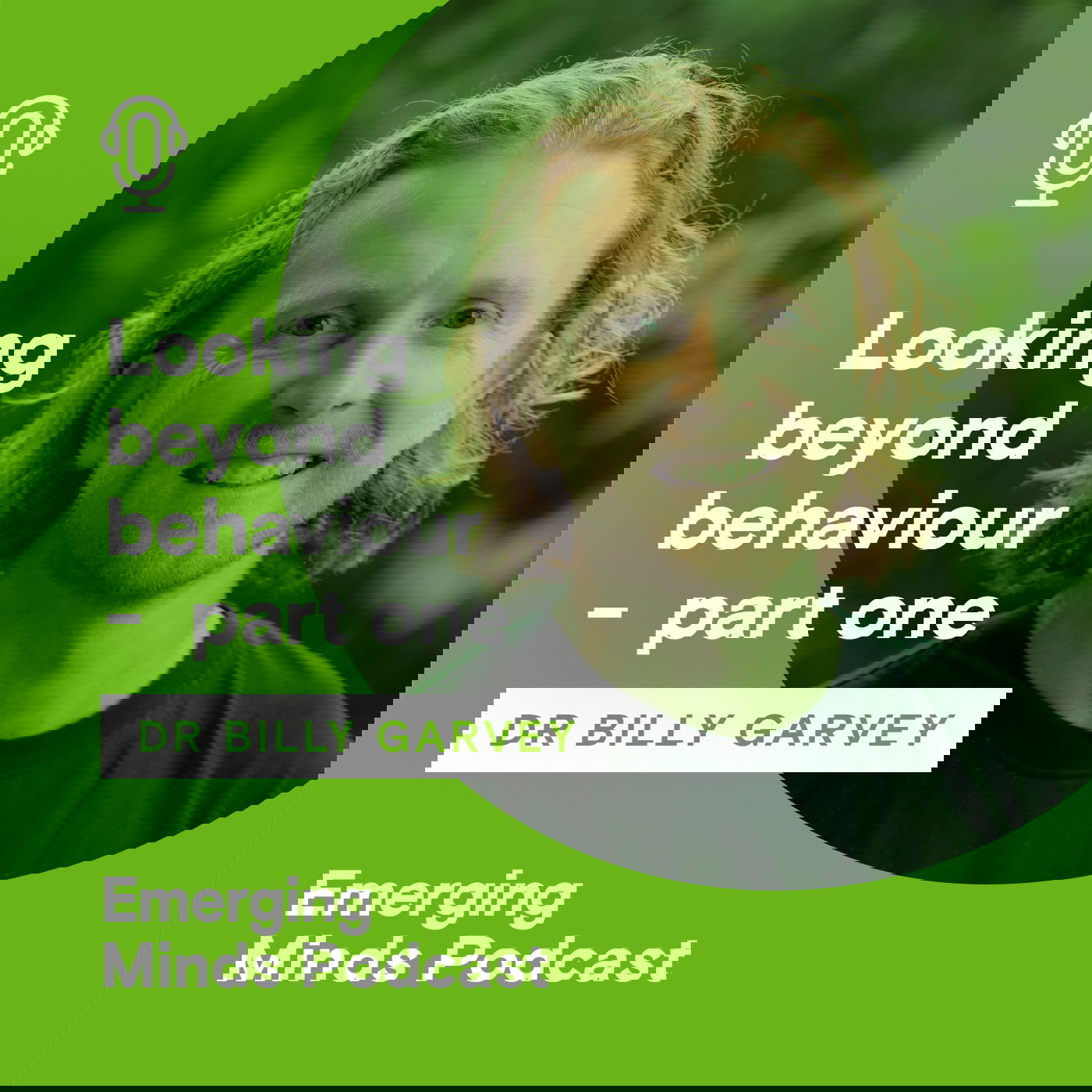
My name is Jackie Lee and you're listening to the Emerging Minds Podcast. This week we wanted to share a recent episode from our Emerging Minds Families Channel, in which host Alicia Ranford sits down with author, podcaster and developmental pediatrician, Dr. Billy Garvey. In this conversation, Billie and Alicia explore the concept of emotion regulation, unpack how children build resilience and discuss the importance of understanding the emotions behind a child's behaviour. You might recognise Billy from our 200th anniversary episodes where he shared how better service, collaboration and community engagement are central to improving mental health outcomes for infants, children, young people and families. So grab a drink, sit back and enjoy the episode.
[00:00:58] Speaker A: Hi, I'm Alicia Ranford and you're listening to an Emerging Minds Families podcast. Before we start today's episode, we would like to pay respect to the traditional custodians of the land on which this podcast is recorded, the Kaurna people of the Adelaide Plains. We also pay respect to all Aboriginal and Torres Strait Islander peoples, their ancestors and elders past, present and emerging from the different first nations across Australia.
If you've ever wondered why your child has big outbursts over seemingly minor things, is not cooperating in the way in which perhaps you'd like, or struggles with transitions, you are definitely not alone.
Challenging behaviours in young children can be really confusing, often exhausting and sometimes even alarming. And as parents, it can be really hard to know what to do in those moments. But beneath the surface, for every child who is having these big, challenging behaviours or is really distressed, there's a deeper story.
Today is the first of two episodes where we talk with Dr. Billy Garvey, a developmental paediatrician with over 20 years experience of helping families navigate the complexities of early childhood behaviour. Through his work and his own podcast, Pop Culture Parenting, Billy brings a really compassionate, science based perspective to these hard parenting issues, helping us understand what's typical, what might signal the need for some extra support, and how, as parents and carers, we can respond in ways that build connection rather than creating more conflict and disruption to family life. Dr. Billy Garvey, it is so great to have you with us today. Thank you for joining us on our podcast.
[00:02:38] Speaker C: No, you're more than welcome. It's lovely to be talking to you.
[00:02:40] Speaker A: So we are talking about those big, challenging behaviours that parents face on a seemingly regular basis and I wanted to ask you, what are some of the most common challenging behaviours you see in children who come to visit you?
[00:02:56] Speaker C: Yeah, I think in the younger cohort, anger and aggression and just not kind of understanding what's going on for those kids and kind of, whether it's at home or in an education setting, like a daycare kinder or school, just not really being able to kind of handle the big kind of expressions that the kids are having. What we call externalizing behavior. That's the most common in the younger kids. And then we see a lot of kids as, you know, the teenagers that are really shutting down and just internalizing. So kind of withdrawing, not talking, not being as active or as involved as they were previously.
Yeah, it's not a perfect rule, but we generally see that kind of balance of the younger kids and the older kids. Yeah.
[00:03:33] Speaker A: And I certainly don't believe that children wake up in the morning wanting to be difficult or challenging to their parents. So in your experience, what do you think is behind lots of these behaviours?
[00:03:45] Speaker C: Yeah, well, it's a really beautiful way that you phrase it because there always is something behind a behavior. Like, we know that from a cognitive understanding of like, action has to have thoughts and feelings that precede us. Don't just do that. It's also, every kind of little kid is getting up, actually trying to just succeed. Kids are just trying to succeed. All of us are just trying to succeed in the way that we live our lives. So we remain calm, our relationships, have positive experiences, we feel good about ourselves. What happens, though, is a lot of kids that I meet in clinic, and we know a lot of kids out there that will never see someone like me in clinic, don't experience much success. So they kind of get used to that. So they kind of just think, oh, this is what things are like. And often, especially if they struggle in certain relationships or environments, like sitting around a dinner table or sitting in a classroom, they will act out behaviors that they know will have an outcome that they feel okay with, such as, you'll get sent to your room, you'll get sent to the principal's office, because that's predictable. And predictability is a really important component of safety. So, yeah, we kind of. I meet a lot of families that are really well intended and professional. Sometimes, especially with younger kids that make the mistake of saying, like, I've asked him why he's doing this, or, you know, I've sat down with her and said, like, this is making our family or our classroom really challenging. Why is this happening? And kids don't really know. They don't have that insight to be able to say, well, actually, I'm really Upset all the time because I'm so worried that people aren't going to accept me or that a threat is going to come from somewhere, or I'm really anxious about separating from a caregiver, or I'm really worried that I will be rejected by my peers, for example. So they don't have the ability to understand that. And us, as clinicians and researchers in this space should help those that support kids in their everyday lives to understand this is really common. What are the signs that a child is struggling? And then how do we actually use the science to help them? That's kind of the main bit of work that I do in clinic, but also outside of clinic.
[00:05:48] Speaker A: And so interesting that you say it's actually a way for them to feel safe.
[00:05:53] Speaker C: Yeah, safety seeking is a really important thing. Like I, you know, without being too much about me, we're often looking around and wondering where threats come from. When we have a history of trauma, when we're anxious, a lot of the time when we're worried that we're kind of not fitting in. And so we. We have this kind of internal monologue. And a lot of it is subconscious, that is saying, you know, where's the next fall going to come from? And so if you've had an experience of that happening, especially what we call complex trauma, where it's been traumatic experience or adverse childhood experiences that have persisted, you can kind of just start to rewire your brain to always be worried about what's going to happen next.
And predictability is one way that you keep yourself safe in that. And that's the child who doesn't attend school and can't leave their bedroom. It's the kid who just internalizes the emotional difficulties they're having. Because they say, well, if I tell that person that I don't like how they're talking to me or treating me, I might be abandoned socially, I might get in trouble when I get home. If I put my hand up and say, I don't actually understand what you want me to do in this subject, the child then doesn't know what will happen. Whereas if they sit there and just keep their head down, they know they might get a zero, they might get in trouble, they might do all those things. But if they've happened over and over again, they're actually safe experiences. And there's a real risk in that these kids get stuck in ruts and they just think that's normally what life is like. And it's a good example. I often meet kids in clinic that are Told by their parents, you just have to go to school, it's a part of life. But I actually disagree with that. I think that's a really low bar that we can do better than. Every kid should be going to school because it's a positive experience and the predictability comes from, no matter what happens, I will be supported and I will be encouraged and I'll be helped. And that's, you know, every child should be in environments like that. And nosh is a very long answer. So nosh. They never experience failure, they never have adversity. They have those experiences in a way where they look around and they know there's support if they need it. And someone will help teach them how to get back up. Someone will help show them that this doesn't define you, this failure and this loss, and then give them the skill set and the things that matter to them that they do want to experience success from. That's kind of what all of the mental health evidence shows us through the life course that's protective for all children, but it's especially those that are at risk of trauma.
[00:08:11] Speaker A: So what I'm hearing you talk about is how it's so important to understand that behind these behaviours there are emotions going along beside it. And we often talk about this concept called emotional regulation, which for many of our listeners, they will perhaps not understand what we mean by that. Can you explain what emotional regulation is and how children develop the skills to navigate through it?
[00:08:38] Speaker C: Yeah, and I think it's interesting, isn't it, because most of us as adults were not taught this as kids. We weren't, you know, we're taught kind of, you know, algebra and, you know, sentence structure, geography, emotions, which is. It's fascinating when you think about it, about how much the quality of our life is determined by our ability to process emotions. And if we think about, like, what we're talking about a bit before that. Below a behavior is an emotion and below an emotion is a feeling. And if we think about the feelings that we have can be really fleeting. They're just experiences we have all through the day. And it's kind of how we emotionally pick up the world, how we internally feel about it and then we express ourselves. Emotional regulation is really about not suppressing those emotions, just moving on from them or gritting your teeth or. It's not about gratitude, it's not about empathy, it's about, I'm angry right now, this is what it feels like in my body, validating that experience, that for whatever reason, that's what's going on for me and then what can I do to help myself have a healthy coping mechanism for that? And that's actually what resilience is. People have misinterpreted resilience so much in the kind of influencer, wellbeing space. But resilience is not. You don't struggle with stuff in the same way that courage is not a lack of fear. Resilience is. I have faced adversity and learned how to process that in a healthy way. And emotional regulation is one of the core kind of 30 plus skill sets of resilience. So anyone that tells you there's one way to be resilient or there's three ways be resilient doesn't actually understand what resilience is. Because part of resilience, which is part of emotional regulation in young kids, is a communication skill. So what we actually want most kids as their first step of healthy emotional regulation capacity building is to say, I need help. Not I'll go off and do mindfulness on my own, or I'll just look around and realize how lucky I am. It's just saying I need help, you know, and that's why anyone who's around a kid, a simple phrase is not, you're okay, it's I'm here. I was saying that last night to my daughter having a nightmare and really distressed, and then five minutes after that to my son who woke up distressed because of that, you know, so it's just, I'm here and I'm. I'm not saying, stop crying, you're safe, everything's okay, there's nothing wrong. I'm just validating that experience they're having because then they will develop the capacity that's beyond most adults hopefully to be able to have those experiences and then function well. But it's not. Yeah, it's especially boys. Like, we just push down this emotional experience. And toughness is never getting upset and never crying, never being scared. Anger's okay, but nothing else is. And then for girls, anger is not okay, but everything else is okay. It's about actually, that's the richness of life. And the challenges of life are the feelings and emotions that we have and how we actually manage them. And that's a defined skill set you can teach kids. But the first step of the action that we want them to do is to help seek. It's really just, I need help, not I'm really angry because this person did that and they upset me and all that. And then we get down and go, did you do first. Like, that's not. Those are cognitive skills. That's critical reasoning. That's not a component. That's important first step of emotional regulation. So, yeah, I mean, I could speak to you for an hour just about that question. So I won't do that to you.
But it's a really important thing because it really impacts relationships so much. The fact that we expect too much of kids, including teenagers, like frontal lobe development is still progressing in your early to mid-20s. You can't expect, especially when someone's dysregulated, even teenagers, to be able to just immediately go, I'm being ridiculous. Because their entire body is telling them that they're overwhelmed. There's a thresh, you know, their sympathetic nervous system is kicked to just like fight, flight, fall and freeze. They're looking for going back to what we talked about before about safety. They're looking for a survival mechanism that potentially has been triggered unnecessarily. But telling them that doesn't help.
It's an opportunity to give them a skill set. And the ways that we teach kids this is in the safest relationships, in the safest environments with low levels of distress. Everyone's like, I want to know what to do when he's really kicking off, or she's completely overwhelmed. And that doesn't work. We don't do anything else like that. We don't go and teach a kid, first time he learns how to ride a bike on a really difficult track.
We go, let's get you really good and comfortable riding with support. And the goal is you get to the point where you can ride the BMS track on your own. But you know, we kind of, we want to jump straight to, to like, I'll just ignore all the low level difficulties, but I need to know what to do when they're really struggling. And that's no skill set works like that. So emotional regulations, no different.
[00:13:23] Speaker A: Yeah. And I really love what you said. And in fact, I first heard this listening to pop culture parenting. And when you said, I'm here, not you're okay. And now my kids are a different age bracket to yours. I have a 20 and a 21 year old. So I'm still thinking about the mistakes that I made when they were little because in my day we still had the naughty corner. And I just said to my kids, you're okay, you're okay, everything's okay, you're okay. And in fact, it was about six months ago and I said to my 20 year old, he was really distressed about something and I said, I'm here for you, mate. And he turned around and he said, thanks mum. And it was so lovely. And yeah, so that, that's something that really resonates with me. I think that's a beautiful message to be able to say I'm here for you rather than, it's okay, it's okay, everything's okay. I think as parents we want to make everything okay for our kids.
[00:14:11] Speaker C: Yeah, definitely. And I don't worry, I come across like that sometimes because I think permissive parenting can be really destructive. Like we, we know through the evidence and longitudinal studies that kids who are impermissive, like anything goes, I just want to be your friend. You know, they really struggle with authority figures, increases their risk of mental illness. You know, that permissiveness is, is understandable because I want to be like that. I never want, you know, my kids to be upset. I just want them to like me and all that stuff. But that's not actually my role. My role is to help them feel safe and secure in and then give them skill sets that'll mean that they have rich relationships and strong, secure self esteem, all that stuff. It's also. So I worry, the other thing I worry about that you just reminded me of is that I say that if you haven't done this, you've ruined your child. And it's not true. Like it's one of the real myths about attachment research is people think it's kind of built in the early years and then that's how kids will feel about the world and all their future relationships. And that's not true. And a lot of people understandably will get defensive when they hear messages that think that they're saying that and they'll say, say no, that's kids. We're too soft on kids these days. They need us to be tougher. And I think that comes from this place of like you're telling me I've been doing the wrong thing and it's a really hard thing to think about. Maybe I should be parenting this kid different. Like a lot of the time in clinic families will come and say this kid needs to change. But the majority of the time it's actually we need to change around the kid. And we talk about individual environment fit like that. And one of the mistakes that we make is we try and get a kid to change, change whether it's a 4 year old or a 14 year old instead of saying actually it's probably us that need to think about that more. So yeah, it's, it's A fascinating thing. You also just reminded me the naughty corner idea. It's. It's really interesting. The. You probably know this, but the evidence about timeout was built decades ago by a guy called Montrose Wolf. And it's been so misinterpreted that it's like, go over there or go to your room or I'll take this stuff. But I actually use this mainly with my daughter. And a lot of the kids in clinic is you. You le the overstimulating, struggling, stressful environment with the kid, and you go out, connect with them, co regulate with them, and then go back in with a strength space. This is what we're going to do together to succeed at the meal time on the playground, the group activity, whatever it is. And it's not. I'm annoyed if it didn't work. It's. That's cool. We just got to jump back out together. And I do that with my daughter, like, not every day, but it would be close to every day, like when she struggles. That's what we do together. And we face stuff together. And it's, you know, it's not. I really avoid shame. I really avoid, like, her feeling isolated. But I go, we can do better than this. Let's come back out, you know, connect, get our system back calm, and then go out there and succeed at it. And it, yeah, it's just such a simple strategy that people don't get taught. And it's been so misinterpreted into, we'll just pin the door closed while they dysregulate further. Once again, if you're doing that, it's. It's just about thinking, maybe I'll try this other thing and see how that goes.
[00:17:12] Speaker A: But isn't it nice also to acknowledge that our understanding children's mental health has changed over the years and it's okay that we're learning new information. And as a parent, I know that I've certainly learned so much more as my kids have grown up that I perhaps could have done a little bit differently when they were younger. But that's okay because I didn't know that back then, but I know it now, and I can sort of change the way I do things now. And like you said, children still respond in their teenage years and as young adults that that frontal lobe isn't fully developed yet. So it's okay as a parent to learn new information and activate it?
[00:17:46] Speaker C: Yeah, definitely. I mean, I'd work with families for nearly 20 years before I had my own kids. And I remember someone asking me what's changed since you had my daughter, who was my first child and I was like, yeah, I just listen more. Including.
It's not, I can't use it at skill on a podcast.
You know, people often just want to be heard. I think we, we know this. Whether it's like emotional coaching or mental health first aid or even some of the high therapeutic things that we do that are a bit more complex. It's not about fixing things or solving things, it's about just sharing that space with that individual. And that's really important.
For my youngest, my five week old, I have to do that. She's on my lap crying. It's not about me stopping her crying, it's about me trying to show her that that signals that she wants me to try and soothe her. And I try and soothe her. So. And that's the same as my other kids. It's not about stopping what they're doing, it's about just connecting with them in those moments and I' just holding space. It can feel really challenging because you're like, no, no, I need to fix this. But as you know, like you had a really tough day and you talk to someone you care about and you trust, if you say that you want them to listen, not be like, well, this is how to fix it, or it'll be fine next week, or you won't care about this in six months, or don't you realize how much harder everyone else has got it? Like those things are actually harmful, they don't help. So it's again, kids are exactly the same. Don't fix it for them. Help them just understand that whatever experience they're having is valid.
[00:19:12] Speaker A: And that's perhaps a great segue into, into my next question, which was how, as parents and carers, can we begin to understand what a child's behaviour is communicating to us?
[00:19:22] Speaker C: Yeah, it's a really interesting thing, especially in younger kids. One of the really helpful things to know is that what something like anxiety looks like. So anxiety in younger kids is quite different to in adults. For example, aggression is a really common feature of anxiety in young kids. And a lot of the kids that I met face that have behavioral difficulties. They're actually anxious. The other thing is that constantly needing reassurance, tummy aches, headaches, that what we call somatic symptoms are really common in young kids around anxiety, clinical anxiety, being that it impacts their functioning over a period of time or even just what we call normative or typical anxiety that is, you know, for example, stranger danger, separation anxiety in the preschool years. That is not something that is often clinical and needs like a clinical approach. But it is often tough time for parents to understand and go, God, why drop off so difficult? You know, that was the hardest part of my parenting journey, was dropping my peeling my daughter off me at daycare. And I'd just be like, riding into work that day, going, that's it. I'm quitting. But actually, the experience that she was having was one that I needed to be aware of and help support. But it was about, like, how does that environment support her and have consistency and responsiveness and sensitivity and. And. But I still struggle with that. I still struggle with separating from any of them. So, yeah, that's, I think, a big lesson about what is below the behavior. And like we said before, it's not about asking the kid. It's about observing what led up to this, what else has been going on. For example, my daughter has a very sensitive temperament, which she will always have. She's a really bright, fiery redhead. I can tell if she has a tough experience that day, that that evening will be difficult, difficult. And so it helps me try. It helps me try to be sensitive and give her a greater threshold for. For having those experiences. But I stuff it up as well, though. Like, sometimes when I'm really exhausted, I get frustrated at her, and it just escalates. And then it's. Yeah, it's an adult who's an expert in this area, supposedly actually making things worse and making a kid dysregulate more because I'm getting frustrated that she's not listening to me, and it's not destructive, but it is important for me to go, yeah, that's. That's not going to work. She's not going to listen as she's getting upset and go, you're right. That is logical thinking about, you know, what happened earlier today, or I should just go to bed because you've asked me five minutes ago, you know, and I promised I would. Once they're dysregulated with kids, it's about just trying to help regulate them. It's not about talking to them or consequences or anything like that. Those things can all happen, but they don't happen in the moment. It's not a way that they get better at that skill set.
[00:22:01] Speaker A: So what do you say to parents who are listening, who perhaps think kids sometimes are just naughty? What's the difference between a child being naughty versus a child struggling to regulate their emotions because there's a need that's not being met?
[00:22:15] Speaker C: Yeah, I Think it's funny, isn't it? Some people are so set on, like, the right words and words you can't use and things like that. That might struggle with naughty, but I think we kind of, what we think about with naughty is maybe more just testing boundaries and testing relationships and kind of what they're really doing is like exploring. Exploring the world. Not often physically, but often, like mentally. And when a child is calm and regulated and doing those things, it's about, how do we help them understand that boundaries consistent. But there's a component that we see in a lot of kids play out, which is called a coercion cycle. And what that is is like, the kid at the checkout is saying, I want the lollipop. And the parents like, you've had heaps of lollies or, no, you know, I don't want to get you a lollipop every time and all that stuff. And what happens is conflict begins. And what happens in the coercion cycle is that the child either escalates and goes, if I just scream, the parent will then give in and I'll get the lollipop. And the parent's like, God, whatever I can do to stop this. So I can just get through this checkout and not feel like everyone's staring at me. The problem is that means it's more likely in the future that the child will then scream to get what they want and use that technique. And it literally wires in their brain as a pathway. The more repetitively they succeed at that strategy, the parent can do the opposite. The parent can just come down so hard on the kid that they're like, if you don't stop asking for that now, you won't have the iPad for the car ride home or whatever. And the problem is, even when that works, it hasn't been a partnership. And it's more likely that the parent will use a punitive approach when the child is being naughty in the future. And. And instead of doing that, saying, the firm boundary is that it's not, we're not having a lollipop. But I'm really sorry you're upset about it. I can see how frustrated you are and just trying to have a significant difference between giving in or being harsh and being like, no, the boundary holds, but I support you through that boundary. And where possible, you understand why the boundaries exist and we connect about it and all that stuff. And the more boundaries move, the more kids will do test where they are. And I learned that actually in my child care years a long time ago. Running programs in the community that I grew up in. Like, if you change the rules every day about even physical boundaries, kids will always check. Am I allowed on the far footy oval today? Because last week I was and it cost them nothing to check. Can I stuff around and throw my food at dinner time? Sometimes it's okay, like, and sometimes it's not. And it's only certain things that need boundaries. And we should pick as family. We shouldn't have social media influencers telling us this is the one way to have a meal time or to do bedtime or anything like that. You should think, what matters to us and what does it look like if it's done well, is that actually achievable where our kids are at developmentally and the resources we've got? And does this matter to us? Cool. Let's just give it a try.
Yes.
[00:25:04] Speaker A: And what a good reminder that it's okay for families to pick their own boundaries and choose what works for them.
And Billy, that's probably a great place for us to pause our conversation and and return next fortnight to talk more about navigating those tricky behaviors in our younger children.
Thank you for coming in. I have really learned a lot.
[00:25:23] Speaker C: No problem. You're more than welcome.
[00:25:29] Speaker B: Thanks for listening. If you enjoyed this episode, I have some good news for you. Part two of Alicia and Billy's conversation is available now in the Emerging Minds Families podcast feed. Just search Emerging Minds families in your favorite podcast app app or head to the Emerging Minds website to listen and if you enjoyed this episode, please give it a rating or review and share the episode with a colleague, friend or family member. We'll be back with you in two weeks, but in the meantime, take care.
[00:25:56] Speaker A: Visit our website
[email protected] au to access a range of resources to assist your practice.
Brought to you by the National Workforce Centre for Child Mental Health, led by Funded by Emerging Minds. The Centre is funded by the Australian Government Department of Health, Disability and Ageing under the National Support for Child and Youth Mental Health Program.