[00:00:02] Speaker A: Welcome to the Emerging Minds Podcast.
[00:00:06] Speaker B: Hi everyone, my name is Vicki Mansfield and you're listening to the Emerging Minds Podcast. I'd like to begin by recognizing the traditional custodians of the lands on which this podcast is being recorded. The Kaurna people of the Adelaide Plains. I pay my respect to them, their ancestors and elders, past, present and emerging, and and to all Aboriginal and Torres Strait Islander peoples joining us today. I also acknowledge that sovereignty was never ceded. This always was and always will be Aboriginal land.
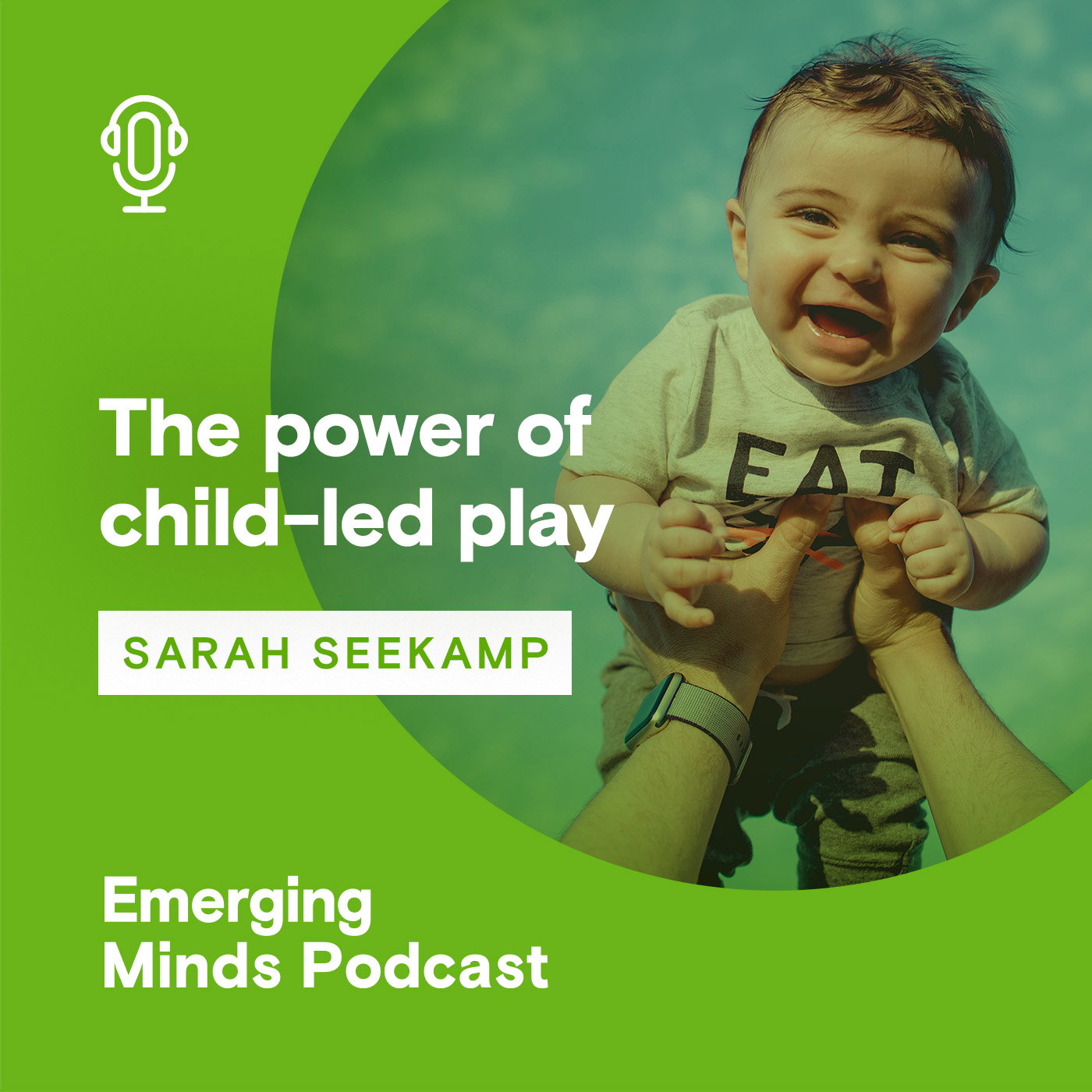
Today's episode is one from the archives. A conversation with occupational therapist Sarah Secamp about the importance of child led play. Article 31 of the United Nations Convention on the Rights of the Child recognises every child's right to rest, leisure, play and recreation. In this episode we invite you to explore how children's right to play can be brought to life in your work with infants, children and families. Sarah shares practical examples of how practitioners can support child led play and discusses what this can look and feel like when engaging with families. She explains why play is fundamental to children's cognitive, physical, social and emotional development and offers accessible strategies for promoting play in everyday practice. We hope you enjoy this episode and feel inspired to reflect on how to integrate play in your practice with children and families.
[00:01:41] Speaker C: Thank you very much, Sarah, for agreeing to come and speak to me today.
[00:01:44] Speaker A: Thank you, Sophie, for having me.
[00:01:46] Speaker C: So when I was thinking about this topic of play initially, I was thinking that it just seems like one that I would take for granted because it's so universal to children across all cultures, I think, and just seems to come so naturally. And then I guess, stopping to think about it, I was wondering if it's like sort of other areas of modern life that have been affected by things like urbanisation so that we've kind of lost or forgotten how to play in ways that support child development and maybe some need to relearn it in a way.
What do you think about that?
[00:02:19] Speaker A: Yeah, I think it's certainly an important thing to reflect on about how our way of life changing affects how children engage with play. And I guess one of the things that instantly springs to mind for me when you talk about urbanisation is, you know, reducing green spaces, reducing backyards, you know, that sense of community safety impacting upon what parents are comfortable allowing their children to do in the community and not. And so I do think that our changing way of life is changing the way that children play. And certainly research would also suggest that the way children are engaging in play and how much play they're engaging in has been changing over time.
And you know, we know that there's an increasing incidence of children battling with mental health issues. And you know, some researchers are suggesting there's a link between changes in the free play and increasing mental illness amongst children.
[00:03:14] Speaker C: Okay, so why is it important for children to spend time playing?
[00:03:19] Speaker A: I guess it's important for a number of reasons. Play is the primary way children develop and grow. So it's vital for their social, emotional, physical and cognitive development and wellbeing. But beyond that, it's also their primary occupation. It's how they get their sense of fulfilment.
It's where they get their fun from as well. And I think we as adults engage in leisure activities and hobbies, which is really like our play. And that's quite restorative for us. That's how we counter against the stressful experiences that we live with every day. And it's similar for children. Children need that opportun, engage freely in play where they can be the decision makers, they can be creative and be in charge of their own little space and world and that's restorative for them.
[00:04:06] Speaker C: And I'm curious to know, what does it look like when children are engaging in the kind of play that is supportive and healthy?
[00:04:14] Speaker A: I think people who have done lots of research in play, obviously there's a general trajectory of development about how children's play as they, from birth until, you know, as they get older. But I guess the type of play that I've particularly been focusing on of recent times is what you might call child led play or free play.
So that's play where the child sets the agenda. You know, they do the activities that are really what inspires them, what they're passionate about. They don't have rules imposed from other people outside.
And you know, they're able to be creative in ways that enable them to problem solve and make decisions and then get that sense of accomplishment that feeds into their sense of self worth and that builds their resilience as they see themselves as someone who can do things that they want to do. And that I think comes more from those free type of experiences where they can be creative to their own will.
[00:05:10] Speaker C: And what's the role for parents then? How can parents sort of create an environment where children can engage in child led free play?
[00:05:17] Speaker A: You know, different families live with different pressures. So for families who are perhaps more resourced, often time is the pressure that they live with. So they might be, you know, very busily moving from one structured activity to the next. And parents might be working long hours. Whereas in families who are perhaps not so well resourced and living with other adversities, you know, their challenge might be around having safe spaces about having physical resources to support play, having a backyard that's, you know, a safe environment to be in, or a local playground that's a safe place to be. So I think the role of parents in supporting child led play is really about creating the space for children to be able to play as the leader of their play. So that's about enabling children to have free time when they're rested and fed, allowing them to have a safe space where they feel like they can be creative and relaxed and engaged with, you know, it might be their toys that they enjoy playing with in their free time, or it might be they love to get out in the backyard, play in the dirt with sticks, or it might be about, you know, taking them to nature spaces. Outside is a really wonderful place for children to be able to play freely and creatively. If you take them to the beach or to a creek or to a national park, you know, children just instantly run off to play freely and create their own games and, you know, that's incredibly fulfilling for them and I guess just giving the children the space, safe spaces with the energy and time to be able to play and children will play.
[00:06:48] Speaker C: And does child led play look like parents being involved in playing with the child or the parents are sort of standing back and letting them go for it?
[00:06:56] Speaker A: Yeah, children need lots of time to be able to play freely without interference from adults. That's really important. However, I guess one of my key messages is that there is a really important role for parents to play in their children's play, and that's about following their child's lead. So as parents, we often have visions about, you know, the right way to do things, or what we want to teach our children, or how we want to support them, to grow and help them when they meet an obstacle.
But what we really want parents to do is to find time to join their children in play, but do that in a way where they sit back and they begin by noticing, you know, what their child's doing and they look for guidance from their child about how they might join in. So the child is very much the leader and the director and the decision maker and the parents engaging in the way that the child would like them to do that.
And I think, you know, that's really important for a couple of reasons. On one level, when a parent enables the child to lead the play, it sends a really powerful message to the child about, you know, their sense of self worth. When the parent validates their choices and their leadership by enabling them to continue to lead the activity and not coming in over the top and correcting and directing. And then for the flip side, you know, what the parent gets to experience when they truly stop and tune into noticing the way the child's leading the activities, they get to really learn about their child, you know, what's their child enjoy doing, how do they deal with solving their own problems as opposed to when you step in and solve them for them. And you know, that noticing of the child combined with the child really loving having their parents undivided attention and validation of their play is the perfect opportunity to strengthen that child parent relationship. And you know, I think that's probably one of the key messages that I've been wanting to convey is that when parents are able to, to join their child in play and follow their lead in play, there's a great opportunity to strengthen those relationships. And we know that, you know, when children have that ongoing responsive relationship with their parents or their primary caregivers, that they do better, you know, they do better at school, they cope better with stress, they have better outcomes in later life. So that relationship with those primary caregivers is really important. And shared play is a really wonderful opportunity to strengthen that relationship.
[00:09:21] Speaker C: And is there. I mean, I imagine obviously as children become teenagers, they become less interested in playing with their parents. But what's the age range where play and childhood play is really important?
[00:09:32] Speaker A: I think having that connection with your parents or your primary caregiver is always really important. It's just the way that connection and involvement in your child's activities occurs, changes. So, you know, if we're thinking about a small infant, you know, maybe nine months old, the parent might purely be making available some toys to that child and then allowing the child to lead, you know, what ones they want to pick up and look at or how long they want to stay looking at those things before they've lost interest, you know, so you can follow your child's lead in that way. And then perhaps moving into school, your primary school play might become more active or it might be, become more creative and the parent can sort of be quite active in the way that they follow the lead. Kids love their parents to be, you know, like a cooperative player in that stage, you know, really joining in the imaginative play or helping to build or create.
But sometimes as kids get even older, the parent, it might be about the parent truly just being attuned to the activity, the adolescent is doing and then being able to have a really nice conversation about what the parent noticed about what the child was doing in their play and, you know, showing their interest through perhaps being more of an observer. If the child doesn't or the adolescent doesn't want the parent to be quite involved. But I guess the key there is if you're following the child's lead about how you are involved, then they will show you what your role is, you know, through the lifespan. If you take your cues from them,
[00:11:01] Speaker C: it sounds like there's something really important and powerful about the child feeling like they can be the decision maker or be the leader sometimes in their relationship. Why is that important for social and emotional wellbeing, do you think?
[00:11:15] Speaker A: I think a couple of reasons. I mean, when children are able to be the decision maker in their play, it enables them to, you know, face challenges and problem solve challenges themselves. You know, we as parents can be sometimes very quick to offer support, you know, with the best of intentions. But the message that a child might see then is that I'm not capable of solving my problems. You know, thanks mum for helping. But you know, if we allow our children and show them we believe that they can problem solve by stepping back that little bit, then they do get to work through that. And then the sense of fulfilment and achievement and accomplishment that children get from solving problems in the safe environment of play, you know, is incredibly, you know, helpful in building that really strong sense of self which is supportive of resilience.
Want the latest child mental health insights delivered straight to your inbox for all the latest research, news, events and learning opportunities to build your confidence in supporting children's mental health and wellbeing. Make sure to subscribe to our E newsletters for families or for practitioners and organisations. Get this information and more at your fingertips by signing up
[email protected] au subscribe
[00:12:35] Speaker C: I just wondered if there's anything different to consider when you may have one child or two or three children that you're trying to facilitate this childhood play.
[00:12:44] Speaker A: Sure. I think ideally it's wonderful if parents can find time to spend with each child one on one when we're talking about, you know, trying to really strengthen that child parent connection. Family time and shared time with siblings is also wonderful. I don't want to take away from that, but where parents can carve out even five minutes regularly with each child, where they're just 100% tuned in to what their child is doing without distractions, you know, when that happens consistently, I think that that really contributes quite significantly to that strengthening of the relationship to the parent being able to really notice and learn about their child and to the child being able to really feel their parents presence and you know, the sense of validation that you get from being able to have some of your very busy parents. Time is important.
So there is a big juggle I guess for par parents who have two or three or more children in terms of trying to fit that in. And I guess my message there would be that quality is probably more important than quantity. So if you can, you know, fit in three or four times a week, five minutes of undivided attention, you know that's going to make a difference. Even though that sounds really small, obviously 20 or 30 minutes is great because the play can become deeper and richer. But if you can have, you know, if you can find five minutes regularly, then that's going to make a difference.
[00:14:08] Speaker C: Hmm, okay, that sounds manageable. So I'll now turn to practitioners and for practitioners who work with families who might be listening to this, how might they use these ideas around play in their work?
[00:14:21] Speaker A: I think perhaps the more obvious consideration is to work with families to help them understand the benefits of play. And you know, it's a relatively accessible and practical strategy that we can offer to offer to families who are living with some sort of adversity that they can try and you know, practitioners can be helpful to those families by not only helping them recognise the benefits, but also helping them find ways that they can fit it into their busy lives and to understand what child led play looks like and how they can support families to play in that way, which we know will give the children all these wonderful outcomes for their social, emotional wellbeing.
But I suppose the other, perhaps less obvious use of play is to actually use it within the clinic setting or in your work setting. So when we have children in healthcare settings, you know, to sit and have a conversation is not their natural sort of way of being, you know, that's quite foreign for them. But to play is their primary occupation.
So when we step into their world and we offer a playful environment and we engage in play with the child and their parent in that therapeutic setting, we've created a much more relaxed environment where the child is, you know, much more able to contribute their thoughts and opinions. The practitioner is able to make some really useful observations about how the parent and child interact and can also set up some really nice opportunities for some reflective conversations about what you might notice about those interactions or observations as well. So I think it's also A really nice tool for practitioners to have when they're working with families with children to, you know, to perhaps trial that, especially in the early stages when you're trying to establish rapport rather than just the sitting and talking that we can often do.
[00:16:14] Speaker C: The next thing I'm thinking about is, is there so part of this about how as a society we've probably become fairly risk averse, which may have impacted on the degree to which parents, families feel comfortable letting their kids engage in free play.
How does that sort of play into it, do you think?
[00:16:34] Speaker A: Yeah, there's quite a body of research sort of emerging in that area which relates to that sense of achievement that children get from problem solving. So there's two key things. We definitely have noticed a shift towards risk adverse play environments. And so one of the outcomes of that has been children have become less practiced at being judges of their own risk because we've taken the risk away. So what the research has shown is that where we provide, you know, risks of a, you know, a reasonable size, not, not obviously too adverse, that children are able to make that judgment themselves about, you know, what they might do or what might actually be unsafe. So we're taking away the opportunity for children to practise that skill.
And the other thing that I think if we take away the opportunity for children to take risks, you know, some of that sense of fulfilment that builds that sense of worth that you get from conquering something that is, you know, that is a little bit risky is not there either. So we again sort of erode the opportunity for children to get some of the sense of achievements of doing something that was a little bit scary. But I did it, you know, and it was okay because I worked out a way to do that. Then it's a shame that, yeah, those opportunities are reduced.
[00:17:48] Speaker C: Yeah. And is there something beneficial about taking risks and it goes wrong. I mean, of course we're not talking or saying in any way we would want serious injuries be going on. But you know, small things where you do get a cut or a bruise or even a broken arm or something. Is there something in that that is sort of part of development and can help a child grow?
[00:18:09] Speaker A: Yeah, it's. I mean, they're self protective behaviors. That's, that's the learning that we do organically for as we get feedback from our environment. So, you know, where we are exposed to. I mean, I'm thinking of a warm heater or something that's been in the campfire, you know, oh, it's hot, you've learnt that lesson, you know, so it's those environments that do have an element of risk, do support that. That organic learning about decision making, about what's safe and what's not so safe. Yeah.
[00:18:39] Speaker C: What would be some of the barriers? What might be. Why might it be hard for a parent to let a child lead, do you think?
[00:18:47] Speaker A: It's quite common for it to be difficult for parents to let their child lead for lots of reasons.
Some of the reasons are that typically parents are in charge, you know, so that's a big shift of power that some people are more able to pass over than others. So certainly parents sometimes need support to be able to do that. And I think also there's attention sometimes when a children. A child's interest is different to the. Or their way of playing is different to what might feel natural for the parent too. So then the parents ideas and experiences of play may be vastly different to what the child is wanting their experiences of play to be. So when there's that mismatch there as well, that again, makes it much harder for the parent to step back and let the child be in charge of these play experiences. Because it feels, you know, wrong. It feels like it's not how it's meant to be. They're doing it this way and I feel like it should be done that way because that's how I used to do it. So I think that the biggest barrier really, to follow the child's lead is when, you know, when the child's lead doesn't feel natural to the parent. And, you know, so that's when I think practitioners have a role in supporting parents to recognise that that's why it's hard. And it's okay that it's hard, but, you know, we kind of need to work towards that being an achievable thing for you. So, you know, bringing that out and acknowledging it, I think is a really helpful thing for families.
[00:20:13] Speaker C: It sounds like it might be something helpful for practitioners to explore with parents if they're trying to introduce or have a conversation about play in the family.
[00:20:23] Speaker A: Yeah. Yes, because it's much, I think, helpful for parents to have to have been made mindful of that, you know, because then as they are inclined to take over or correct or teach, then, you know, they've already thought about, okay, that's how I want to do it, but right now I've got to follow how they want to do it. So it can be good for the parent to be ready to watch for that.
[00:20:47] Speaker C: Mm. Okay.
What would you say to parents that maybe do feel uncomfortable about. Cause like you say, it is a shift of power to sort of let your child take the lead and be the decision maker. And I can imagine that's uncomfortable for some parents and maybe they feel if they let it go, how do they get the power back? You know?
Can you say anything about that?
[00:21:11] Speaker A: Yeah, I think one of the things that has been trialled quite successfully around play is to be quite open and transparent with the child when you're having this special play time.
So I think for parents that, you know, have to really switch on a different headset to engage in child led play to let their child be the leader, you know, that approach might be helpful. So what that really looks like is the child being involved in a conversation about mum is going to try and spend some more time playing with you. We're going to have this special play time and we're going to try and do it regularly and it's going to be a time when I won't be busy doing other things. I'll be just available to play with you. But when that play time finishes, then I'll need to go back to doing my, my jobs and, and then you can keep playing on your own if you like. So what it does is it sets up a really clear beginning and end to the play, which can be helpful for the child because once parents begin playing with their children, and especially if it's, you know, the child's leading the play, they don't want their parent to go, go off and continue doing the many other tasks they need to be doing. So certainly, you know, some families have found lots of success in helping the child know that this is going to happen again. It's, you know, it's going to be a regular thing that we'll do, but it has a beginning and an end. And so the rules of kind of the child led play occur in there, but then, you know, then we go back to you playing and me doing my jobs and that sort of thing.
[00:22:38] Speaker C: So having some really clear communication, putting some boundaries around how long the play might go for.
[00:22:44] Speaker A: Yep, sure.
[00:22:44] Speaker C: Yeah, absolutely.
[00:22:46] Speaker A: You know, if parents are able to find the time to play with their children and to let their children be the leader in that play, then, you know, that's a wonderful investment in every child's mental health.
All right, well, thank you very much,
[00:22:59] Speaker C: Sarah for your time.
[00:23:00] Speaker A: Thanks.
[00:23:01] Speaker C: Appreciate it.
[00:23:07] Speaker B: Thank you for listening. If you enjoyed this episode, please give it a rating and review on Spotify, Apple Podcasts or wherever you're listening and make sure you're subscribed so you never miss an episode. You can find over 200 episodes exploring infant, child and family wellbeing on our website. So dive in and we look forward to connecting with you again soon.
[00:23:29] Speaker A: Visit our website
[email protected] au to access a range of resources to assist your practice.
Brought to you by the National Workforce Centre for Child Mental Health, led by Emerging Minds. The Centre is funded by the Australian Government Department of Health, Disability and Ageing under the National Support for Child and Youth Mental Health Program.